The Threshold Moment: How the Instant Before You Ask Reveals Your Deepest Power

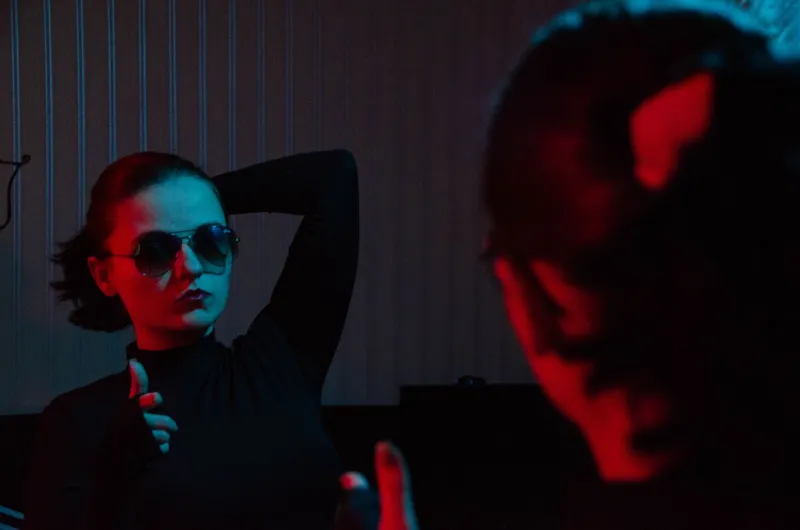
Photo by Photo by Gantas Vaičiulėnas on Unsplash on Unsplash
There is a particular kind of silence that precedes a request. Not the comfortable silence of someone who has nothing to say, but the electric, almost unbearable stillness of someone who knows exactly what they want and has not yet permitted themselves to say it. If you have ever stood at the edge of that silence — heart rate elevated, mind crystalline, fully aware of what is at stake — then you already understand something essential about power that most leadership seminars will never teach you.
That moment is not your vulnerability. That moment is your power.
The Paradox That High Performers Miss
Among accomplished adults — executives, creatives, entrepreneurs, and anyone who has built a life through sustained competence — there is a nearly universal misreading of the pre-ask state. The racing pulse, the heightened awareness, the acute sense of exposure: these physiological signals get filed under anxiety, and anxiety gets treated as something to overcome before proceeding.
This interpretation is understandable. It is also profoundly costly.
What the high performer experiences in that threshold moment is not the body announcing danger. It is the body announcing full presence. Every cognitive and emotional resource you possess has been recruited toward a single act of authentic expression. You are, in that instant, more completely yourself than you are in almost any other context. The vulnerability you feel is real — but it is the vulnerability of someone who has temporarily set down their armor, not the vulnerability of someone who is about to be destroyed.
The paradox, then, is this: the moment that feels most dangerous is often the moment you are most magnetic.
What Anticipation Actually Does to the Nervous System
Neuroscience offers a useful frame here. The anticipatory state — what researchers sometimes call "wanting" as distinct from "liking" — activates dopaminergic circuits in ways that heighten focus, sharpen perception, and increase the salience of everything around you. You are not merely thinking about what you want; you are oriented toward it with a precision that ordinary consciousness rarely achieves.
In intimate contexts, this orientation is particularly potent. When you are about to ask a partner for something that genuinely matters — a boundary you need honored, a desire you have never voiced, a confession that carries real weight — your entire relational intelligence comes online. You notice their body language with unusual acuity. You choose your words with care. You are, paradoxically, at your most present precisely because the stakes have made distraction impossible.
This is not a state to escape. It is a state to learn to inhabit.
The Difference Between Tension and Dread
One of the more useful distinctions available to the discerning adult is the difference between productive tension and anticipatory dread. They can feel similar in the body — both involve elevated arousal, both involve uncertainty — but they are functionally opposite.
Dread is future-oriented. It is the mind rehearsing failure, cataloguing consequences, constructing an elaborate case for why the ask should never happen. Dread contracts. It narrows your field of vision and reduces your options to a binary: proceed and suffer, or retreat and be safe.
Tension — genuine, clean tension — is present-oriented. It is the body's acknowledgment that this moment is real, that the person across from you is real, that what you are about to say carries genuine weight. Tension expands. It makes you more available to the moment, not less.
The practice, then, is not to eliminate the feeling before you speak. It is to identify which quality of feeling you are actually carrying.
A Framework for Harnessing the Threshold
For those who wish to translate this understanding into practical application, consider the following approach.
Pause before you perform. When you feel the pre-ask tension rising, resist the impulse to either rush forward or retreat. Give yourself three full breaths — not as a relaxation technique, but as a deliberate act of acknowledgment. You are telling your nervous system: I see what is happening here. I am choosing to stay.
Name the desire precisely. Before you speak, take a moment to articulate to yourself — with genuine specificity — exactly what you are asking for and why it matters. Vague desires produce vague requests, and vague requests invite vague responses. The clarity you achieve in that private instant before speaking will infuse your words with an authority that no amount of rehearsal can manufacture.
Let the tension be visible. This is perhaps the most counterintuitive instruction available to high performers: do not hide the fact that this matters to you. The impulse to perform effortless confidence is understandable, but in intimate contexts, effortlessness can read as indifference. Allowing the person across from you to perceive that your request carries genuine weight is not weakness. It is an act of relational honesty that deepens connection.
Claim the ask as information. Whatever response you receive, the act of having asked will tell you something essential — about yourself, about the other person, about the nature of the dynamic between you. Approach the threshold not as a test you might fail, but as an inquiry you are genuinely curious to pursue.
The Intimate Application
Nowhere is this framework more immediately relevant than in the arena of erotic and intimate life. The request for something desired but previously unspoken. The conversation about a boundary that has been privately held for too long. The admission of a fantasy that has lived only in interior silence.
These are precisely the moments where accomplished adults most frequently abort the threshold — retreating into performance, deflection, or the comfortable management of desire rather than its authentic expression. And the cost of that retreat is not merely a missed moment of pleasure. It is the slow erosion of genuine intimacy, replaced by a sophisticated simulation of it.
The person who learns to stand in the threshold — fully aware, fully present, fully willing to be seen — does not merely become more effective at asking for what they want. They become, in the deepest sense, more themselves. And there is no quality more magnetic than that.
The ask will come. The question is whether you will arrive at it as someone rushing to get through a difficult moment, or as someone who has learned to recognize that difficult moment as the place where their most authentic power lives.